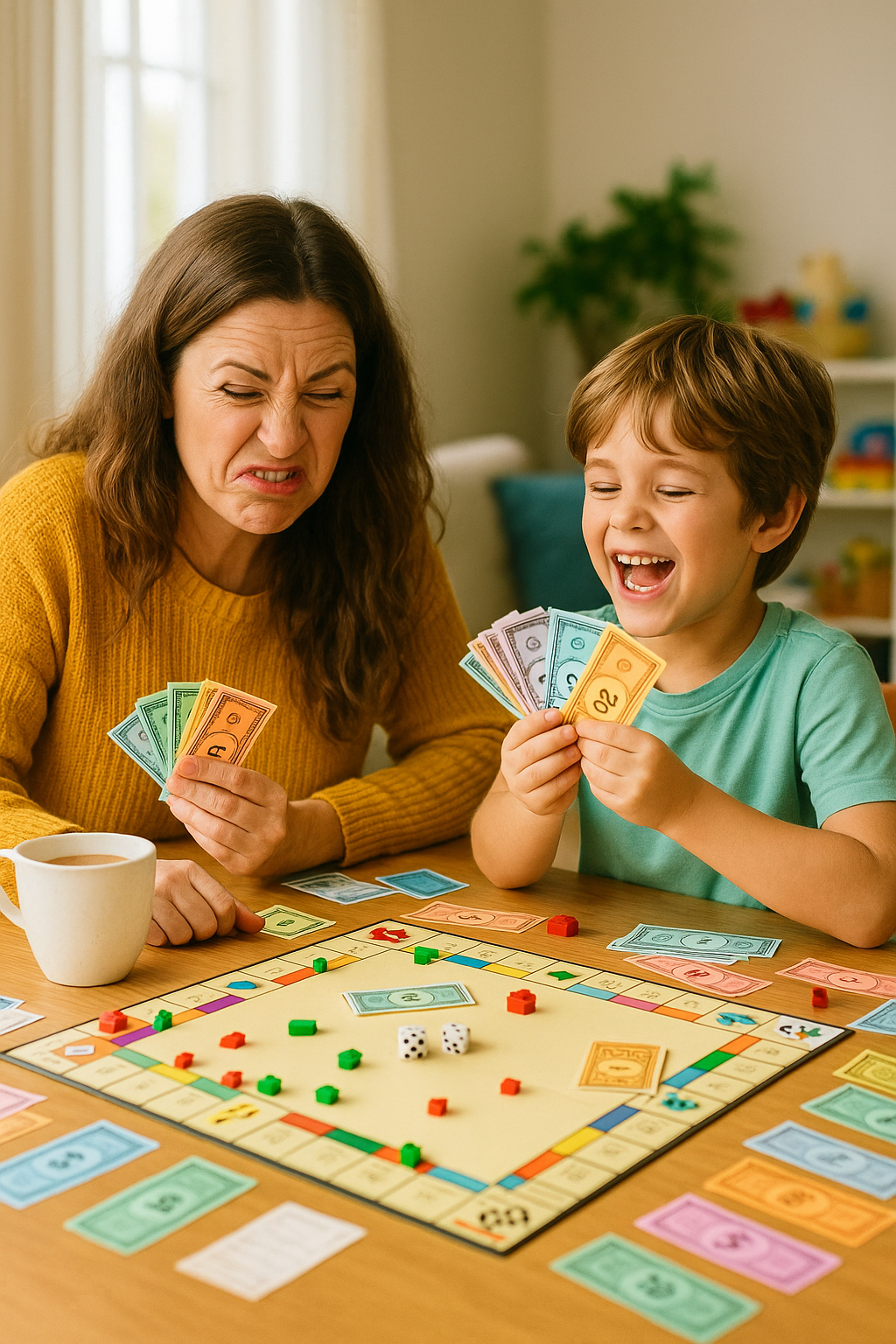
I’ll admit it. The words “money” and “fun” don’t usually belong in the same sentence. For most adults, money brings images of bills, budgets, or that uncomfortable moment when your child asks for a toy right after you’ve paid the rent. But here is the truth: teaching kids about money does not have to feel like a lecture. When money becomes playful, children not only listen, they actually enjoy learning.
I’ve tried this with my own kids, and I can tell you that when money shows up in their games, something changes. Their eyes light up. They don’t complain or roll their eyes. Instead, they start asking questions, testing ideas, and even challenging me with their own “money rules.” And that is exactly what you want, because excitement is the engine that makes learning stick.
Why fun works
Children are natural explorers. They learn through movement, laughter, and imagination. Psychology has shown that when learning happens through play, kids remember the lessons longer and feel more confident applying them. If we only connect money to adult stress, kids will grow up thinking it is something scary or complicated. But if we introduce money as a tool, a puzzle, or even a game, they begin to see it as something they can manage. That shift is powerful. It changes the story from “money is a problem” to “money is a skill.”
Turning money into a game
One of my favorite things to do with my kids is create a money scavenger hunt. I hide coins around the house and each coin comes with a question. The questions are simple: Which costs more, an apple or a toy car? If you have five coins and spend two, how many are left? They giggle while running around searching, but at the same time, they are doing math and building money awareness without even realizing it.
Another game that works really well is the challenge jar. You take a few jars and give each jar a purpose. One jar is for saving towards a treat, another jar is for donating to others, and a third jar is for investing in something that grows. Watching the jars fill up gives children a physical connection to their money. They can see progress, which is much more exciting than numbers on a screen.
Sometimes I let them play entrepreneur for a day. They might make cookies to sell to the neighbors or create drawings and put a small price on them. The point is not to earn a lot of money. The lesson is that when you create something valuable, people are willing to exchange money for it. That spark of pride they feel when they make their first euro is priceless.
Keeping it positive
Many parents make the mistake of turning money lessons into a series of “don’ts.” Don’t spend it all. Don’t waste it. Don’t ask for more. But negativity does not inspire learning. Children hear the word “don’t” and their minds close.
What works far better is reframing the message into something positive. Instead of saying “Don’t spend,” you could say “Let’s see how much you can save this week.” Instead of “We can’t afford that,” you might try “Let’s find a fun way to earn for it together.” The difference is subtle but it completely changes how children feel about money. They stop seeing it as a wall that blocks them and start seeing it as a tool that helps them reach goals.
The long-term payoff
You may wonder if making money into a game really matters in the long run. The answer is yes, and research supports it. Habits formed in childhood often last well into adulthood. A child who learns to set aside a small part of their allowance will likely grow into an adult who budgets. A child who sees money growing in a jar will be less afraid to invest when they are older.
Many of us adults struggle with money stress because we never learned these lessons ourselves. That is why making money fun for our children is not just a game. It is breaking a cycle. It gives them confidence and prepares them for the financial decisions they will face later in life.
Simple ways to start today
If the idea of teaching money feels overwhelming, start small. Hand your child a coin and encourage them to put part of it aside before spending. During your next shopping trip, ask them to help identify what is a need and what is a want. If they are asking for something new, create a saving jar together and celebrate when they reach the goal.
These small moments matter. They may look simple, but they are the foundation of healthy financial habits. And more importantly, they show children that money is not something to fear. It is something they can manage with confidence.
My takeaway
When I first turned money lessons into playful activities, I thought I was doing it only for my kids. But here is the funny part: I started learning too. By making saving visible, by talking openly, and even by treating budgeting as a kind of game, I noticed my own mindset shifting. I was less stressed and more focused on what money could do instead of what it was holding me back from.
Kids have this amazing way of turning even the simplest things into an adventure. When they run around the house shouting because they found a hidden coin, it is a reminder that learning does not have to be serious to be meaningful.
So the next time you wonder how to teach your child about money, don’t reach for a lecture. Reach for play. Hide a coin, start a jar, or launch a silly mini business together. You might discover that the best financial lessons do not sound like lessons at all. They sound like laughter, curiosity, and pride.
Leave a Reply